Choose the Right Card Design for Your Arabic Message
Which card design suits which message — the four design groups, what each is built for, and how to match tone to occasion without overthinking it.
The design is the part of a card that speaks before anyone reads the words. Getting it roughly right matters more than getting it perfect — a Ramadan wish on a football background reads as a mistake, while any of several tasteful designs would have worked equally well.
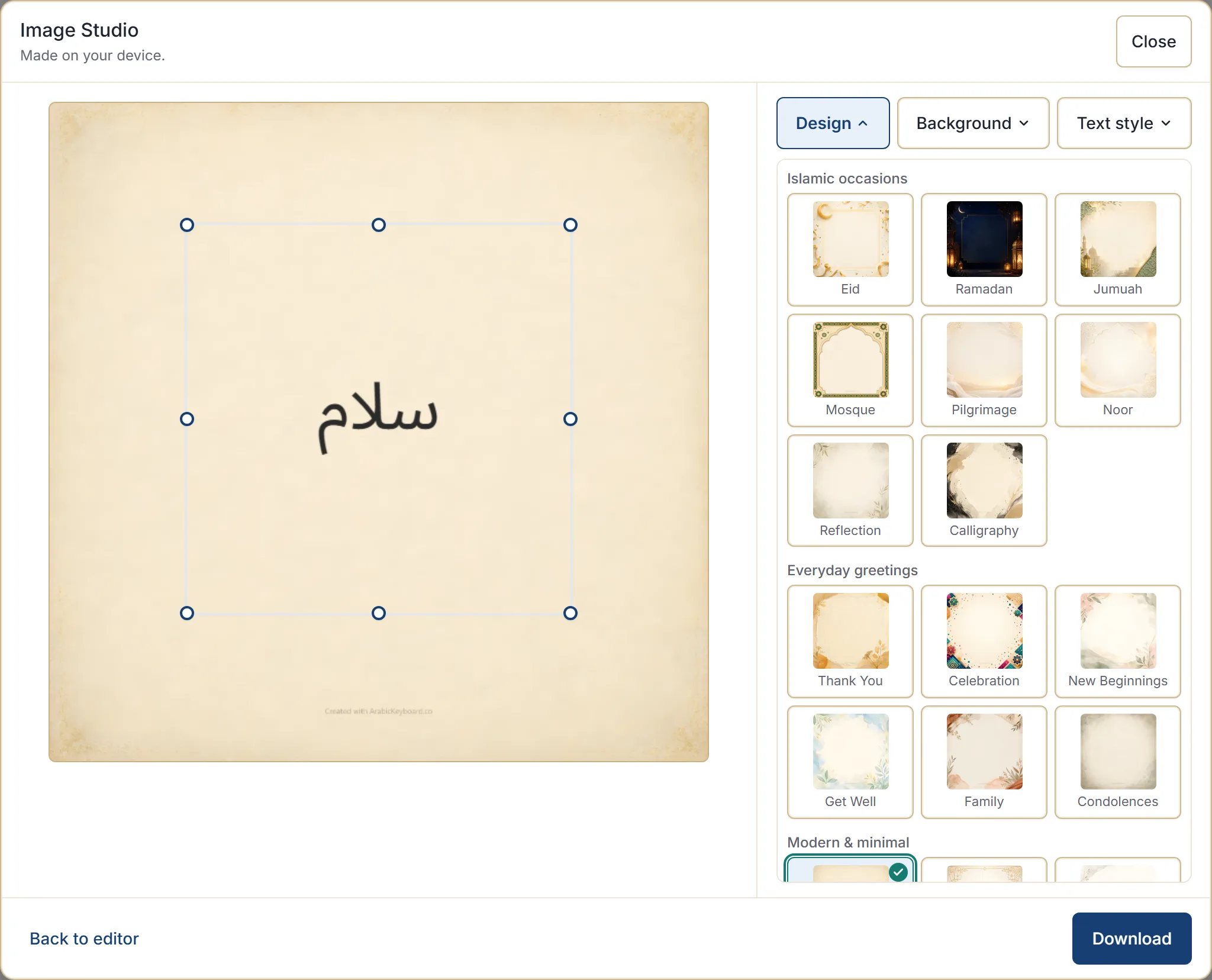
The designs are grouped by what they are for, so most of this decision is choosing the right group.
The four groups
| Group | Built for | Typical designs |
|---|---|---|
| Islamic occasions | Religious occasions and reflective messages | Eid, Ramadan, Jumuah, Mosque, Pilgrimage, Noor, Reflection, Calligraphy |
| Everyday greetings | Life events and personal messages | Thank You, Celebration, New Beginnings, Get Well, Family, Condolences |
| Modern & minimal | Anything, when you want the words to lead | Classic, Elegant, Minimal, Modern, Luxury, Floral, Nature, Watercolor |
| Fun & youth | Light, informal messages | Bold, Football, Sports, Summer Vacation, Youth |
Each design comes with several backgrounds in the same style, so picking a design narrows the look without locking you to one image.
Matching design to occasion
A practical mapping rather than a rule:
| Sending | Try |
|---|---|
| Eid greetings | Eid, or Calligraphy for something quieter |
| Ramadan wishes | Ramadan, or Noor |
| A Friday greeting | Jumuah, or Mosque |
| Hajj or Umrah wishes | Pilgrimage |
| Congratulations | Celebration |
| A wedding, a new baby | Celebration, or Floral |
| A thank you | Thank You |
| Get well wishes | Get Well |
| A new job, a move, a fresh start | New Beginnings |
| A family message | Family |
| Condolences | Condolences |
| Anything, tastefully | Classic, Elegant, or Minimal |
When you are unsure, the modern and minimal group is the safe answer. Those designs carry any message without claiming an occasion, which makes them hard to get wrong.
Condolence messages
The condolence design is deliberately placed at the end of its group and is never a default — you have to choose it. That is intentional, so it is never suggested at a moment when it would be jarring.
If you are writing one, keep the card plain and the words plain. Condolence and sabr cards covers the tone as well as the mechanics.
Tone, not just topic
Two cards can suit the same occasion and say different things about your relationship with the person. A rough guide:
- Calligraphy, Elegant, Luxury read as formal and considered — an older relative, a colleague, someone you address respectfully.
- Celebration, Floral, Family read as warm — people you know well.
- Bold, Youth, Sports read as casual and playful — friends, a group chat, younger family.
- Minimal, Classic read as neutral — appropriate everywhere, memorable nowhere, which is sometimes exactly right.
If the occasion is serious, choose the quieter option. A restrained card is never the wrong call; an over-decorated one can be.
The background does half the work
Having picked a design, cycling its backgrounds changes the feel considerably without changing the character. Darker backgrounds read as more formal and evening-ish; lighter ones read as warmer and more open.
This is usually a faster route to “that looks right” than switching designs. Change the background first, and only go back to the design list if the whole character is wrong.
Readability beats decoration
The most common mistake is a beautiful background the text disappears into.
Text colour is set to Auto by default and picks light or dark to suit the background, which handles most cases. Where you want a specific look, gold, silver, and several deeper tones are available — but check the preview at a glance rather than up close. If you have to work to read it, so will the person you send it to. Adjusting the text area, colour and background covers the controls.
Your last choice is remembered
The design, background and text colour you used last are remembered on that device, so making a second card in the same style takes no setup. They are stored in that browser only, alongside your other preferences, and they do not record what you wrote.
Next step
Open the Arabic keyboard, type a greeting, click Create card, and cycle the backgrounds on one design before changing anything else — it is the fastest way to see how much range a single design has.